


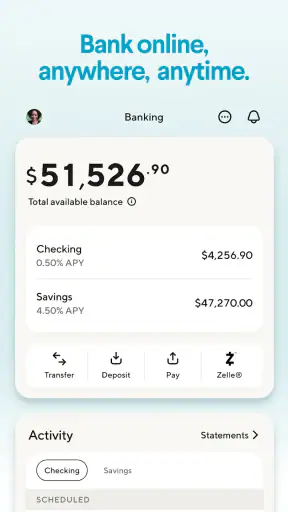

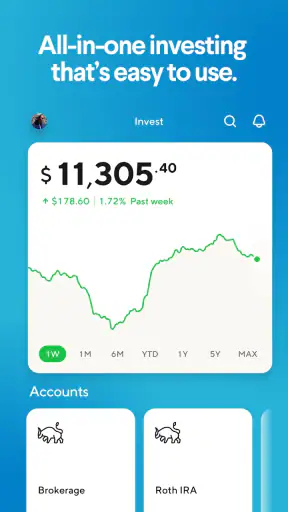
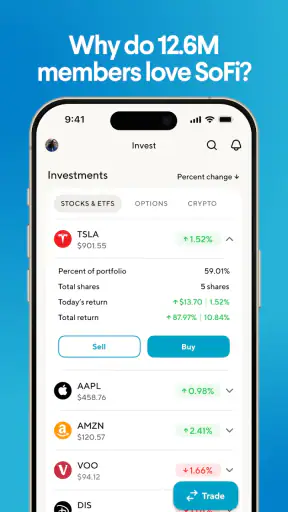
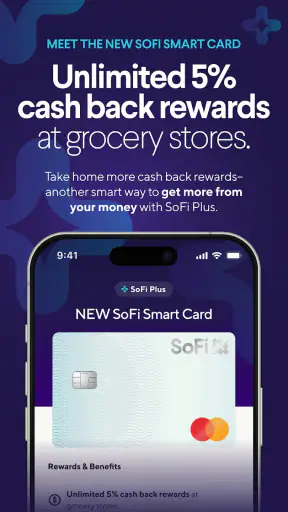
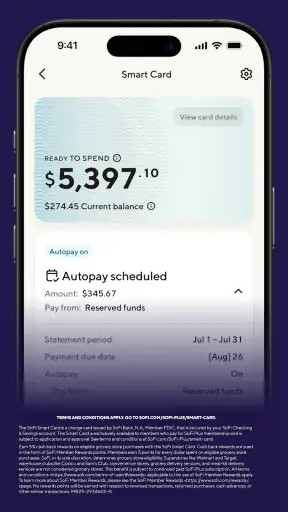

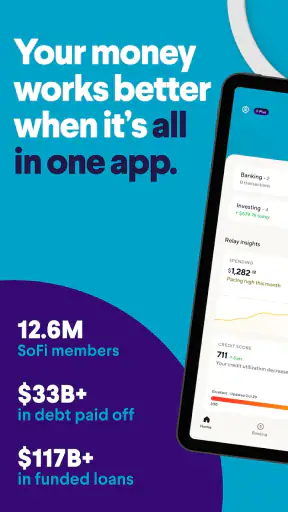
When I look at SoFi as a finance app, the feature that stands out most is the way it brings everyday banking and investing into one place. That sounds simple, but it changes how I manage money: instead of treating my spending account, savings goals, investments, and crypto activity as completely separate jobs, I can view them through one financial dashboard. The real benefit is less switching, not automatic financial success.
SoFi is a free finance app from Social Finance, LLC, available for everyone and running on Android 8.0 or later. It has been around since Apr 10, 2017, and the current version is 3.110.1. Its store summary points to banking, investing, crypto trading, high-yield savings, and an AI money guide called SoFi Coach. In my experience, that combination makes the app most interesting for people who want a broad financial hub rather than a narrowly focused budgeting tool.
The app has a 3.8 average from around 54 thousand ratings, with about 21 thousand written reviews and over 5 million installs. Those figures suggest a sizeable audience, although they also tell me not to treat the experience as universally smooth. Finance apps are especially personal: a feature that feels convenient to one person can feel too limited or too broad to another.
One financial dashboard, with real convenience and real boundaries
What the combined approach changes
The central capability is consolidation. SoFi is designed to let me handle several types of financial activity from the same app instead of opening one banking app for cash, another investment platform for shares, and another service for crypto. That does not remove the need to understand each product, but it does reduce the mental overhead of remembering where everything lives.
I find this most useful during ordinary money decisions. If I receive income, I can think about immediate spending, savings, and longer-term investing without changing apps. If I am checking whether I can afford a purchase, I can see my broader financial position rather than looking only at the balance on one card. That wider view is valuable, but it can also encourage a false sense of control if I mistake visibility for a complete financial plan.
The banking side is aimed at people who want a place for daily money and savings, while the investing side is there for people who want market exposure. Crypto adds another category with a very different risk profile. Keeping all three close together is convenient, yet it means the app places conservative and speculative choices beside each other. I would not use the presence of a crypto section as a reason to buy crypto, and I would not assume that an easy interface makes investing low-risk.
SoFi Coach adds a guidance layer through artificial intelligence. I see that as potentially useful for turning a vague question into a starting point, such as thinking through a savings habit or organizing financial priorities. I would still treat its suggestions as prompts for reflection rather than personal financial advice. An AI guide can help me ask better questions, but it cannot know every detail of my obligations, tax position, risk tolerance, or family situation unless I provide and verify that context carefully.
How I would set it up for everyday use
I would begin with the banking function rather than immediately exploring investments or crypto. The first practical job is to understand where money comes in, where regular spending goes, and what amount can reasonably be set aside. Once that picture is clear, the other sections become easier to use responsibly. Starting with the most exciting option is usually the wrong order for a finance app.
My next step would be to give each goal a job. Cash needed soon should not be treated like money intended for a long investment horizon, and money used for bills should not be confused with money I can afford to expose to market swings. SoFi’s unified layout makes this separation a personal discipline rather than something the interface can decide for me.
I would also use the app as a review point, not as a place to constantly react. Checking every market movement can turn an investing tool into a source of anxiety. A better routine is to look at balances and goals on a schedule, then make changes only when there is a clear reason. The app makes access easy; I still need rules that prevent impulsive decisions.
One non-obvious advantage of a combined app is that it can reveal opportunity cost. When I see savings, investments, and spending in the same general context, it becomes easier to notice that adding money to a speculative position may compete with building a cash buffer. That comparison is more useful to me than simply seeing whether one individual account went up.
A realistic monthly scenario
Imagine I am paid near the end of the month and have three immediate priorities: cover rent and utilities, keep enough cash for groceries and transport, and make progress toward a future goal. In a single-purpose investment app, I might see only the last part. In a traditional bank app, I might see the first two but need another service for investing. With SoFi, I can review the whole arrangement in one place before deciding what to move or invest.
In that situation, I would first protect the money needed for fixed bills. I would then check whether my savings balance is moving toward its purpose. Only after those steps would I consider an investment contribution. Crypto would be the last consideration, if it appeared at all, because it is the easiest part of this scenario to overvalue when the market is exciting.
This workflow shows the app’s strongest practical effect: it gives me a broader context before I act. It does not guarantee that I will make a good decision, and it does not replace a detailed budget, but it can make disconnected decisions feel more connected. For someone who tends to forget the relationship between spending and investing, that is a meaningful improvement.
Where the app feels stronger than usual alternatives
Compared with using a separate bank, brokerage, and crypto service, SoFi is simpler to navigate at a high level. I would rather open one app to get an overview than remember several logins and mentally combine balances. This is especially appealing to someone who is beginning to organize finances and does not want a complicated collection of specialist tools.
Compared with a budgeting app, however, SoFi’s identity is different. A budgeting-first service may offer deeper categorization, detailed spending analysis, or more elaborate planning views. SoFi’s advantage is breadth across banking and investing, not necessarily the deepest possible treatment of every budgeting detail. If my main problem were tracking subscriptions, splitting categories, or analyzing years of spending, I would compare it carefully with a dedicated budget product.
Compared with a specialist brokerage, the trade-off is also clear. A brokerage-focused platform may be better for a person who wants advanced research, specialized order tools, or a more detailed investing environment. SoFi’s appeal is the connection between investing and the rest of my money. I would choose the specialist option if investment analysis itself were my main activity.
Compared with a crypto-only exchange, SoFi is less narrowly focused by design. That can be helpful if crypto is only one small part of my finances, because I do not need a separate environment for every interest. It can be less appealing if I want crypto-specific depth and spend most of my time studying that market.
The trade-offs I noticed
The biggest trade-off is breadth versus depth. A single app can make financial life feel organized, but each section may not satisfy someone who wants the most specialized tools available. I would not choose SoFi simply because it contains many categories. I would choose it if the convenience of bringing those categories together matters more than having the deepest feature set in each one.
There is also a behavioral risk. When banking, investing, and crypto sit close together, moving from a savings balance to a market position can feel frictionless. That may be convenient, but friction sometimes protects me from impulsive choices. I would keep a written rule about what money is available for investing and what money is off-limits, rather than relying on the app’s layout to enforce good judgment.
The AI guidance deserves the same balanced treatment. SoFi Coach can be a useful conversation starter for people who do not know where to begin, especially when a financial question feels too broad. Still, I would verify important decisions independently and avoid treating generated guidance as a substitute for a qualified adviser. The more serious the consequence, the less comfortable I would be relying on a quick in-app explanation.
Another possible friction is that an all-in-one experience can make comparison shopping less obvious. If I already use a bank with terms I like, or a brokerage that fits my investing style, moving everything for convenience may not be worthwhile. I would compare the actual account arrangements and service experience before consolidating. The app’s free price removes one barrier to trying it, but free access alone does not make every part the best fit.
Security and privacy also deserve attention from any person combining financial activities. I would use a strong, unique password, protect the device, and review every confirmation before moving money. I would also be cautious about connecting financial information simply to make the dashboard look complete. Convenience is useful only when I remain comfortable with the access and information involved.
Small habits that make the combination more useful
My first tip is to separate “available now” from “available eventually.” A total balance can be misleading if it includes money intended for bills, emergency savings, investments, and higher-risk assets. I would mentally assign each balance a purpose before judging whether I have room to spend or invest.
My second tip is to use Coach for questions, not commands. Instead of asking an AI guide to tell me what to buy, I would ask it to help me frame a goal, identify information I need, or explain a financial term in plain language. That keeps the tool in a supporting role and makes it easier to notice when a decision requires human expertise.
My third tip is to review the app after a life change rather than only when markets move. A new job, a different rent payment, a family obligation, or a change in income can alter the right balance between cash and investing. The unified view is most valuable when it helps me update priorities, not when it encourages constant trading.
A fourth useful habit is to keep crypto mentally isolated even though it appears alongside other products. I would decide on a maximum amount before opening that section and treat it as money that could lose substantial value. The convenience of access should never determine the size of the position.
Who will gain the most from SoFi
I think SoFi is strongest for someone who wants a straightforward financial home base. That could be a person starting to save and invest, a worker who wants daily banking and longer-term goals in one place, or an existing user who dislikes juggling multiple financial apps. The free price makes experimentation easier, and the everyone age rating keeps the app broadly accessible, although responsible use still depends on the user’s financial maturity.
It may also suit people who learn best by seeing relationships. Someone who understands money more clearly when cash, savings, investments, and crypto are visible together may get real value from the layout. The app can encourage a more complete conversation with myself: am I building reserves, spending too much, or taking investment risk before my basics are covered?
I would be more cautious recommending it to someone who wants only a high-detail budget, only advanced investing tools, or only a dedicated crypto platform. I would also hesitate for a person who is likely to trade impulsively because every option is easy to reach. In those cases, a narrower app can be healthier, even if it is less convenient.
My final take after using the full approach
SoFi is most convincing as a connected money workspace, not as a shortcut to better finances. Its banking, savings, investing, crypto, and SoFi Coach functions can make financial decisions easier to view in context. That is a genuine everyday advantage, particularly for people tired of switching between separate services.
At the same time, I would keep expectations realistic. The app’s broad coverage does not mean every section will replace a specialist product, and the ease of moving between sections can encourage decisions that deserve more thought. I would use it with clear money boundaries, regular reviews, and independent checks for important choices.
For me, the best reason to try it is the unified perspective: I can ask not only “How is this account doing?” but also “What does this choice do to my overall plan?” If that is the question I want an app to help me answer, SoFi is a sensible free starting point. If I already know that I need deep budgeting analysis or advanced market tools, I would look beyond its all-in-one convenience before making it my only financial platform.


